


Finding the right senior care option for a loved one can feel overwhelming. With so many choices available, it’s important to understand which type of care best meets their needs.
While some older adults require basic help, others may need specialized support for memory-related conditions such as Alzheimer’s or dementia.
Senior living communities offer different levels of care to address these needs. Assisted living helps with daily tasks in a supportive, social environment, while memory care has a structured setting designed for those with cognitive decline.
Here, we’ll explore the key differences between assisted living vs. memory care to help you make an informed decision and find the best fit for your loved one.
What Is Assisted Living?
Assisted living is designed for people who need some help with daily activities but still want to maintain independence.
These communities provide a balance of support and autonomy, helping with tasks such as bathing, dressing, medication management, and meal preparation while encouraging residents to stay active and engaged.
Assisted living communities provide a vibrant social environment with opportunities for residents to participate in group activities, fitness programs, and community events.
They offer on-site dining, housekeeping, and transportation services, creating a convenient and comfortable lifestyle. Staff members are available 24/7 to provide basic health monitoring and coordinate care with outside healthcare providers when needed.
Assisted living is ideal for seniors who are mostly independent but require some support to maintain their quality of life. It can be a good option for older adults who may no longer feel safe living alone or who want to enjoy a more social setting with added convenience.
What Is Memory Care?
Memory care is a specialized type of senior living designed to support individuals with Alzheimer’s disease, dementia, or other cognitive impairments.
Unlike traditional assisted living, memory care communities provide a structured environment staff, specifically trained to care for those with memory care issues, enhanced safety measures, and programs tailored to the unique challenges of memory loss.
These communities are designed to reduce confusion and promote a sense of security. Memory care units typically feature secure entrances and enclosed outdoor spaces to prevent wandering, a common concern for those with dementia.
Staff members receive specialized training in dementia care, enabling them to provide compassionate support, manage behavioral changes, and assist residents with daily tasks in a way that preserves dignity and independence as much as possible.
Memory care communities offer therapies and activities that focus on cognitive health and emotional well-being. Programs may include music therapy, art therapy, sensory stimulation, and reminiscence activities that help engage long-term memory.
Daily routines are structured to provide consistency, reduce anxiety, and encourage social interaction. Many communities also incorporate exercise programs and brain-stimulating games to promote overall well-being.
Memory care is best suited for individuals who require a higher level of supervision due to memory-related conditions.
By offering a secure, nurturing environment with specialized support, these communities help residents maintain their best possible quality of life while providing peace of mind for their families.
Key Differences Between Assisted Living vs. Memory Care
While both assisted living and memory care provide support for older adults, they differ in the level of supervision, staff training, and specialized services they offer.
Understanding these differences can help families choose the best option based on their loved one’s needs.
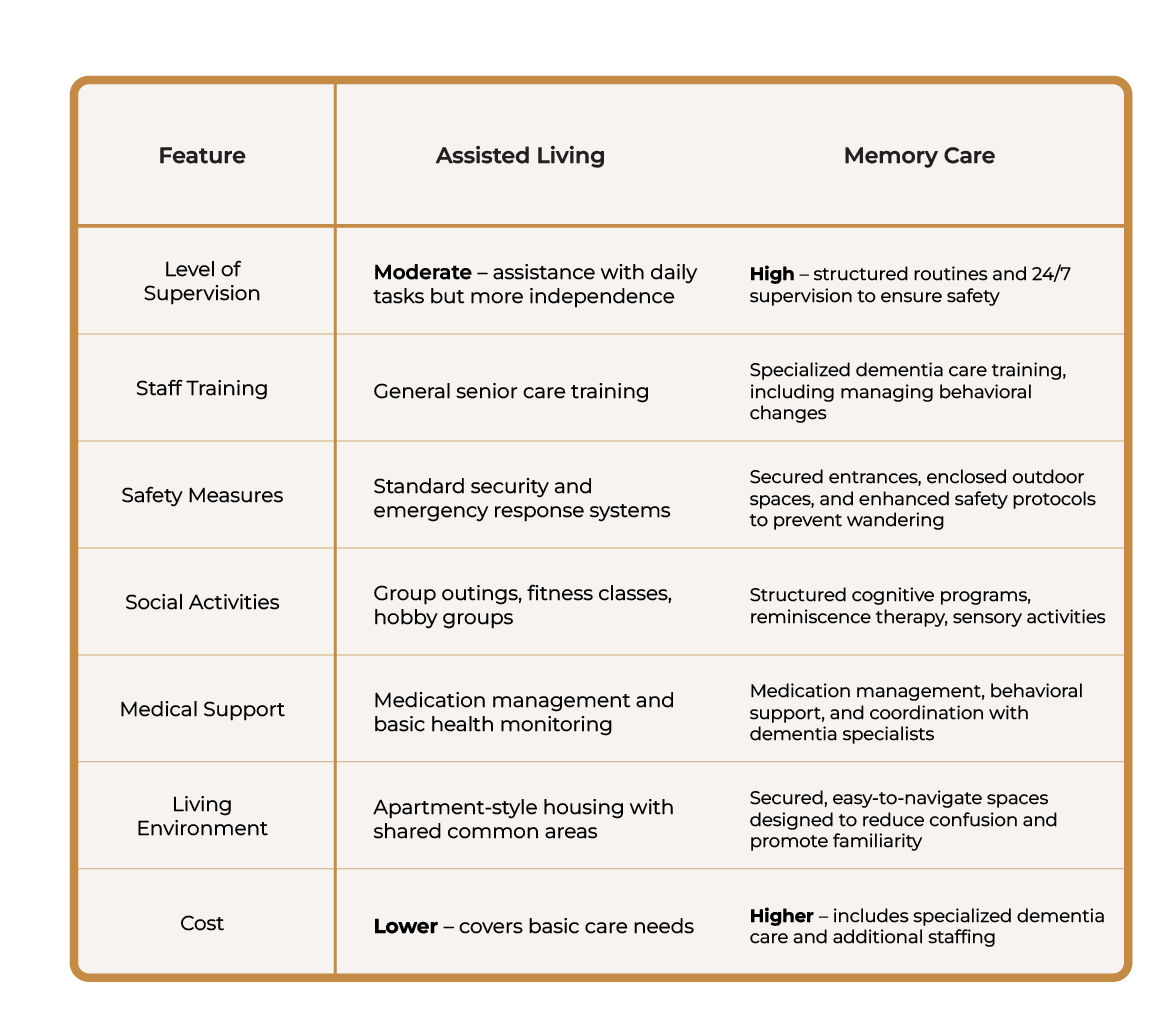
Choosing between assisted living vs. memory care depends on the individual’s cognitive and physical needs. If a loved one is mostly independent but needs occasional help with daily tasks, assisted living may be the right choice.
However, if memory loss is affecting their safety, behavior, or ability to complete everyday activities, a dedicated memory care community may provide the higher level of support they require.
Signs That Memory Care May Be the Better Choice
Deciding whether a loved one needs memory care can be difficult, especially if they are already receiving support in an assisted living setting. However, certain signs may indicate that a higher level of care is necessary to ensure their safety and well-being.
If you notice any of the following, it may be time to consider a dedicated memory care community:
- Frequent Confusion or Disorientation: If your loved one becomes easily confused about time, place, or familiar surroundings, it can lead to frustration and distress. Memory care communities provide a structured environment with routines that help reduce confusion and anxiety.
- Wandering or Getting Lost: If your loved one has left home or their current living space and struggled to find their way back, a secure memory care community can provide the supervision and safety measures needed to prevent dangerous situations.
- Difficulty with Daily Activities Despite Assistance: If basic tasks like dressing, eating, or bathing become increasingly challenging, even with help, a higher level of support may be necessary. Memory care staff are trained to assist with these activities in a way that preserves dignity while reducing stress and frustration.
- Increased Safety Concerns: Leaving the stove on, forgetting to lock doors, or experiencing frequent falls are all signs that a person may no longer be safe in an assisted living or home environment. Memory care communities are designed with safety in mind, offering secured spaces, fall prevention measures, and staff who are trained to handle emergency situations.
Recognizing these warning signs early can help ensure your loved one receives the care and supervision they need in a setting that prioritizes both safety and quality of life.
If you’re unsure whether memory care vs. assisted living is the right choice, consider speaking with a healthcare professional or touring memory care communities to explore the best options.
Cost and Financial Considerations
When comparing assisted living vs. memory care, it’s important to consider cost. Memory care generally costs more than assisted living due to the higher level of specialized care, increased staff training, and additional safety measures provided.
On average, memory care can be 20–30% more expensive than standard assisted living, though costs vary depending on location, amenities, and the level of care required.
The price difference reflects the enhanced services in memory care communities, including 24/7 supervision, dementia-specific programming, and secure environments designed to prevent wandering.
In contrast, assisted living is more affordable because it primarily offers help with daily activities and basic health monitoring rather than intensive cognitive care.
Financial Assistance Options
While senior living can be costly, there are several financial assistance options that may help offset expenses:
- Private Pay: Private pay is very common, offering a high-quality experience from meals and activities to care. Private pay is often funded by the resident's assets including the sale of their home.
- Medicaid: Some states offer Medicaid waivers that cover a portion of memory care costs, particularly for those who qualify based on income and medical need. Medicaid typically does not cover room and board in assisted living, but may help with personal care services.
- VA Benefits: Veterans and their spouses may be eligible for financial assistance through the Aid and Attendance benefit, which helps cover the cost of some independent living, assisted living, or memory care.
- Long-Term Care Insurance: If your loved one has a long-term care insurance policy, it may cover a significant portion of memory care or assisted living expenses, depending on the policy terms.
- Other Financial Resources: Families may also consider options like selling a home, utilizing life insurance policies, or exploring state-specific senior assistance programs.
Choosing the Right Option for Your Loved One
Selecting the right care option for a loved one is a deeply personal decision that requires careful consideration of both current and future needs. While assisted living may provide the right level of support now, memory care may be necessary down the road, especially if your loved one has been diagnosed with Alzheimer’s or another form of dementia.
One of the best ways to determine the right fit is to tour senior living communities and ask about their levels of care. Many communities offer independent living and assisted living with memory care as a transitional option, allowing residents to receive additional cognitive support as their needs evolve.
Communities are always glad to give tours, enabling people to better understand options well in advance of any decisions. When visiting, take note of the environment, safety measures, and staff training to ensure the community aligns with your loved one’s needs.
It’s also helpful to consult with a trusted doctor. They can assess your loved one’s cognitive and physical health, providing expert guidance on whether memory care vs. assisted living is the best choice. Their insight can help families make a more informed decision about when and where to transition to a higher level of care.
The Takeaway
Choosing between assisted living vs. memory care is a significant decision, but finding the right level of care can greatly enhance a loved one’s safety, well-being, and overall quality of life.
Whether they need occasional support with daily activities or specialized dementia care, selecting the appropriate community ensures they receive the care and attention they deserve.
By taking a proactive approach and carefully evaluating options, families can choose a living arrangement that prioritizes their loved one’s safety, comfort, and quality of life—both now and in the future.
Unlike traditional assisted living, memory care communities provide a structured environment staff, specifically trained to care for those with memory care issues, enhanced safety measures, and programs tailored to the unique challenges of memory loss.