


As we age, choosing the right living arrangement becomes an important decision that can greatly impact quality of life. Whether you're a senior considering your next steps or a caregiver helping to navigate this transition, it’s essential to know the differences between independent living and assisted living.
Deciding between these options depends on a variety of factors, including health needs, lifestyle preferences, and long-term planning. This article will help you compare the two, so you can make an informed choice.
What Is Independent Living?
Independent living is a housing option for older adults who can manage their daily lives without assistance but want the benefits of a community setting.
These communities provide a safe, maintenance-free environment where seniors can enjoy social activities, on-site amenities, and a lifestyle that supports independence.
Key Features of Independent Living
- Private Residences: Seniors live in their own apartments, cottages, or homes within a community setting.
- Community Amenities: Many independent living communities offer dining options, fitness centers, walking trails, and entertainment areas.
- Social Engagement: Organized events, clubs, and outings help residents stay active and connected.
- Minimal Assistance: While personal care services are not typically included, some communities offer meals, activities, housekeeping, and general transportation.
What Is Assisted Living?
Assisted living is a senior care option for older adults who need some help with daily activities and want to maintain as much independence as possible.
These communities provide a balance of support and autonomy, ensuring that residents receive assistance while enjoying a comfortable and social living environment.
Key Features of Assisted Living
- 24/7 Support: Trained staff are available around the clock to assist residents as needed.
- Help with Daily Activities: Assistance with bathing, dressing, grooming, medication management, and other personal care tasks.
- Meal Services: They have nutritious meals included with options for special dietary needs.
- Private or Shared Living Spaces: Residents have their own apartments or rooms, with common areas for dining and socializing.
- Engaging Social Activities: Communities offer fun programs, fitness classes, and events to keep residents active and engaged.
Key Differences Between Assisted Living and Independent Living
While both assisted living and independent living provide a supportive community environment, they differ in the level of care, services, and costs.
Side-by-Side Comparison
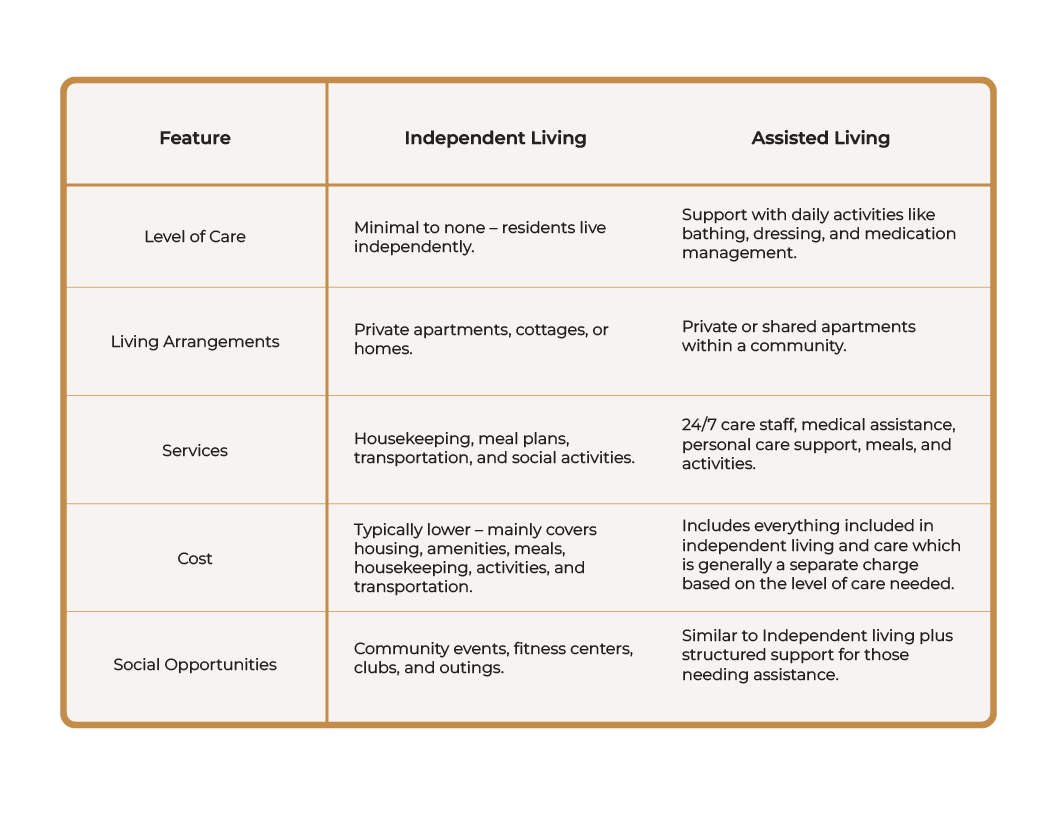
If a loved one is mostly self-sufficient but wants to downsize and enjoy a community setting, independent living may be the best fit.
However, if assistance with personal care and daily routines is needed, assisted living offers a safer and more supportive environment.
Which Option Is Best for Your Loved One?
Choosing between assisted living and independent living for seniors depends on several factors, including health needs, lifestyle preferences, and financial considerations. Many communities offer a mix of independent living, assisted living, and memory care, simplifying the decision process and providing consistency of community as a person's needs may change.
Factors to Consider
- Health Needs: Does your loved one require assistance with daily activities such as bathing, dressing, or medication management? If so, assisted living may be the better choice.
- Level of Independence: If your loved one is still active and able to manage daily tasks but wants a maintenance-free lifestyle, independent living may be ideal.
- Budget: Independent living is typically more affordable than assisted living, but costs vary depending on the community and services offered. Consider financial resources and long-term affordability.
- Future Planning: Health needs can change over time. If your loved one is mostly independent now but may require care in the future, look for communities that offer a continuum of care to make transitions easier.
When to Transition from Independent Care to Assisted Living?
Even if independent living is the right choice now, there may come a time when assisted living becomes needed. Signs that it may be time to transition include:
- Difficulty managing daily tasks like dressing, bathing, or preparing meals.
- Increased forgetfulness or trouble keeping up with medications.
- More frequent falls or mobility challenges.
- Feelings of isolation or difficulty participating in social activities.
- Family caregivers struggling to provide needed support.
If you notice these signs, it may be time to start discussing a move to assisted living. Planning ahead can help ensure a smooth transition and give your loved one the support they need while maintaining as much independence as possible.
The Takeaway
Choosing the right senior living option is a significant decision that depends on individual needs, lifestyle preferences, and long-term planning.
If you or your loved one is considering a move, take the time to explore all options. Visiting independent living and assisted living communities can give you a firsthand look at the environment, amenities, and level of care available. Speaking with staff and residents can also help you feel more confident in your decision.